Featured

The Black Woman Filmmaker

Spring 2016

Diversity is the spectrum on which shared experiences travel a continuum; one that cannot be traveled if we do not explore how these connections are linked.  Although filmmaking is indeed a form of communication, it is a complex composition of flaws, struggles, conflicts, etc., that through the cathartic act of writing, directing and/or interpreting her art, as a black woman she is making accessible for the first time that which has been unspoken.


Misrepresentation of History/Herstory

Veronica Rodriguez

Comm 137 SP16

History has always been on an uneasy swing back and forth from dramatizing and minimizing some truths. What happens when history is not written unbiasedly is that history is being changed by the media, or the reporting entity. Women didn’t have the chance to make films from 1930-1960. During the whole 3o year period, films were being produced and we had a male perspective of a female lifestyle and struggles. It’s quite obvious and should go without saying but a male cannot write about a woman’s experiences with accuracy, unless he’d been a woman before.

illusions-2

Films would have been very different if women were a part of Hollywood for 30 years. One example we discussed often was Cheryle Dunye and her film based upon this exact problem. She could not find any women like her from the past and could not identify with anyone. It wasn’t until the 60s when TV became popular and these women were able to get some of their jobs back. The movement turned into what we now call the LA Rebellion.  But why were they considered outlaws? They were just women trying to produce authentic work. I mean after all, people write about what’s familiar to them, and I don’t think it would vary greatly in this case either. These women’s goals were to tell stories of African American people. A lot of history had happen and not only were women erased from it by not being in films or making them, but also the AA community wasn’t being represented. 

What happen in Hollywood then?! How do we know what we know is the truth?

Well, unfortunately, no one will know what the real life of a woman was in those 30 years. No one will really know what it was like to be an AA lesbian filmmaker/enthusiast either- and that is unfortunate.

Because of this missing history, filmmakers made up history; there was no herstory, and an alternate reality was produced.

In the film by Julie Dash, Illusions, the film critiques the minorities in the film industry and not given credit where it is due. The film presented us with a film in black and white showing and given illusion it was in 30s when no films were being produced in those times. The film also has a white woman play an AA woman which distorts reality. 

0ce075012bbd18881da5e681aa1f7ef7

The invisibility of woman was shown through these latter produced films. There’s a “mask” on Liela because the voice is from an AA woman, but as I mentioned, the woman acting is not. The distortion of illusion is strong in this film and in some ways it’s difficult to make out what is fiction and what is fact, but in essence, the voicelessness of women in these films suggests the reality of their reality. These films were intended for the white audience therefore they are created with their views of the world, which we can say is skewed, but cannot say wrong because if it’s THEIR truth, then it is A truth, just not necessarily MY truth. Nevertheless, the objective for these women were to regain their voices and their importance, not only in films and filmmaking, but in history- to make HERSTORY.


Citations

“Illusions (film).” Wikipedia. Wikimedia Foundation, n.d. Web. 08 June 2016.

Juliedash. “”Illusions” – Dir. Julie Dash.” YouTube. YouTube, 14 Dec. 2006. Web. 08 June 2016.

“Review: Julie Dash’s ‘Illusions’ (Digitally Remastered Version Released on DVD This Week).” Indiewire. N.p., 03 Sept. 2014. Web. 08 June 2016.

“Rewriting Hollywood History in Julie Dash’s Illusions.” Senses of Cinema. N.p., 02 Feb. 2009. Web. 08 June 2016.

The Success of a Black Woman Filmmaker

Maggie Papikyan

Comm 137 Spring 2016

The success of a black woman filmmaker would come from the ability to create content that is universal and relatable to all. Female directors of color are typically expected to make films that solely pertain to their culture and heritage, such as the civil rights movement. But it is unfair to typecast a director, all directors should be able to create content addressing any stories or themes that they are passionate about. They should not fear rejection, nor should they worry if people are going to accept their bravery to successfully make these films. Sure, validation from your peers and the rest of the industry is very important… but that is not what defines the term “success”. I believe that success for a black woman filmmaker would be having the ability to connect with a larger audience, regardless of race or color. In an interview with Chicago Tribune, Sergio Mim’s stated, “The truly good movies are universal… they deal with issues that everybody can relate to. Regardless if the film is a black film, has black characters, or white characters, or Asian characters, or Hispanic characters — a good film transcends.”

quote-time-will-tell-whether-folks-want-to-point-and-stare-at-the-black-woman-filmmaker-who-ava-duvernay-107-8-0881.jpg

Taking that into consideration, the film Love and Basketball successfully covered multiple themes and reached a broader audience. It touches on personal obstacles, chasing your dreams, discovering yourself, family turmoil, gender bias, and more. Monica and Qunicy’s relationship was exciting to watch and very relatable. We are also finally seeing a female character who is strong and driven, yet still romantic and able to fall in love with the boy next door. There is something in this film for everyone to relate to; its universal and definitely meets my definition of success.

lovebasketballin.jpg

Work Cited

http://www.huffingtonpost.com/2015/06/16/love-and-basketball-oral-history_n_7572140.html

http://www.vice.com/read/my-struggle-being-a-black-woman-filmmaker-outside-white-hollywood

http://www.thefeministwire.com/2012/07/sisters-in-cinema-where-are-the-black-women-film-directors/

http://articles.chicagotribune.com/2005-10-19/features/0510190174_1_black-director-black-people-african-american

Selma


Veronica Rodriguez

Comm 137

http://player.history.com/pservice/embed-player/?siteId=hist&tPid=21101464

Politics have always been puppet shows in my opinion. Media sensationalizes what is problematic because it gets views and sells. Media is a powerful tool, but to those in the lower class or minority groups, the media has become a double edged sword. It pushes stereotypes and doesn’t allow for new perspectives. People have limited perspectives as it is which don’t stem from a negative place, however they are coming from a place of privilege. We also discussed the issue about authenticity and producing media that can seem as if it is pushing negative or incorrect information, but if a person genuinely believes it, then there’s no way to say that it is indeed incorrect.

141223_BB_Selma_MLK.jpg.CROP.promovar-mediumlarge.jpg

In the film Selma politics are depicted as if the black community was asking for something they didn’t deserve. It sensationalized the revolting group which was MLK’s following as problematic. The one thing we did see get more coverage was the fact that more women were shown. Ava DuVernay had to fight to construct Selma to include and represent the women who were also a part of the movement.

Media coverage becomes problematic when the dominant culture’s ideologies are being set up to seem as if they are the only truth. Media makes the minority groups conform to their standards and ideals of what is the right/wrong, good/bad/, etc. Unfortunately, the audience and the market are not inclusive of everyone. They only have in mind the White Americans. Therefore all of the sensational stuff to get a person fired up is planned. Everything that we watch is based that we are a homogenous group.

141223_BB_Selma_Gov.GeorgeWallace.jpg.CROP.promovar-mediumlarge.GeorgeWallace

There are some films produced that navigate through the politics and the industry. But at the end of the day, the media produced is for the white people therefore the black community is yet again set up to continue the embodiment of being “angry black people.” If the media doesn’t make a change about how they see other communities, those communities continue to suffer because no one is questioning what is being fed. These political contingencies cannot be stopped, the outcome can be changed.

The reading, “Fired Up.” has a great example because she mentions the construct we have when discussing the Rodney King incident. I formerly also referred to it as the Rodney King trial, but once I read the book, it made me realize how wrong we are to refer to is as such. As such he is the man going on trial. He wasn’t; he did nothing wrong. Yet the media took to highlight the case as if it is nothing more than just a mere example to show or some type of entertainment. Recently we’ve been hearing media coverage about black teens getting killed and the conformity and content-ness of the “audience market” doesn’t change. The unfortunate thing is that while Mr. King fought for equality, media will take whatever it can benefit from and showcase it, because after all the POC audience doesn’t matter.

All in all, in the reading and in the film, these two pieces depict politics as a war zone for those who it only includes. This is because the people who are shown are typically lower class citizens who live in areas where if they do respond back, they’ll continue  the negative press until a political contingency is brought up to de-sensationalize these citizen’s lives. But in the process, question all that the media has fed you as facts, instead of their mere reality, perception.


Citations:

“Selma.” IMDb. IMDb.com, n.d. Web. 06 June 2016.

History.com Staff. “Selma to Montgomery March.” History.com. A&E Television Networks, 01 Jan. 2010. Web. 06 June 2016.

Lockett, Dee. “How Accurate Is Selma? We’ve Separated Fact From Fiction.”Slate Magazine. N.p., 24 Dec. 2014. Web. 06 June 2016.

Cheryle Dunye

Veronica Rodriguez

Comm 137 SP 16

Cheryle Dunye is a filmmaker who is a black female filmmaker who is very original in her content. Her personal agenda is mainly to educate other people about social issues that are seemingly uncomfortable to talk about. She pushes limits and creates new spaces for other women like her. One film that I really enjoyed was a film called Stranger Inside. In a way, it  is like Orange is the New Black in that it deals with women in prison. However, in this film, she brings up so many social issues that are never addressed. She is a lesbian herself and in her films she brings that with her also. In the few films I discuss, there it is evident that her struggles are being documented.

0mv5bmjiymjc3mzkzof5bml5banbnxkftztgwnjazmziwmje-_v1_uy1200_cr9006301200_al_

Although her films can seems to be a little surprising with the rawness, that is what makes Cheryle such a great filmmaker. She discusses intersectionality of being a woman, black, lesbian, and also in a male dominated work force. She often shares her vision through what is now known as Dunyementaries. She integrates fact and fiction, where fact is in form of a documentary, and it usually is her playing herself.

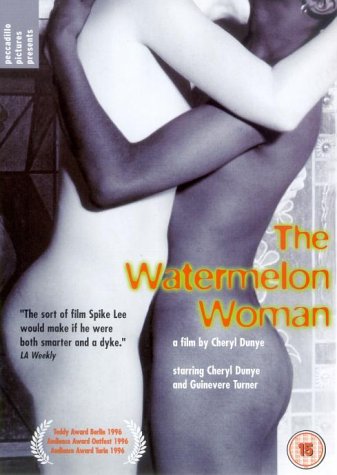
The first lesbian feature film was produced by Dunye herself. She was looking to find more information about black female filmmakers, and also those who happened to be lesbians, like herself. She wasn’t able to so the film, Watermelon Woman, is supposed to close a gap and make a statement.

Dunye wanted to create more roles for black women and for them to be recorded in history. The visibility of women has always been shadowed by males, more so the visibility of black women. Because she wanted to create a more open space for black women to be noted, she also produced the film, Stranger Inside. This film used real people who played themselves. Dunye was able to deliver an authentic story that allowed the issues she’d been faced with to be exposed.

Her films all examine the social inequality issues, colorism, queerism, and racism. The final film I discussed in my midterm paper was Black is Blue. It was about a woman who is transgender male. This film comes from the woman gaze and Dunye was able to ensure authenticity to the LGBT community as well.

All in all, Cheryle Dunye has been making film that evoke emotion that is suppressed by common media practices. She makes films to make us see past the sugar coating of history and allow us to think for ourselves. The films all have similar burdens which reflect Dunye’s own. She is not a binary person. She has to intersect all of her characteristics and in that way, she is able to perpetuate misconceptions about the black experience and more specifically, the black lesbian experience.

Citations:

“Stranger Inside.” IMDb. IMDb.com, n.d. Web. 04 June 2016.

“The Watermelon Woman 1996 Part 1 of 2 – Video Dailymotion.” Dailymotion. N.p., n.d. Web. 04 June 2016.

Norrena, Jim. “California College of the Arts.” Cheryl Dunye’s “Black Is Blue” Awarded Best Short Film at Frameline Film Festival. N.p., n.d. Web. 04 June 2016.

Industry Reactionism and Siren Spirits

Maggie Papikyan

Comm 137 Spring 2016

During class, we focused a lot on Selma and we discussed the behind-the-scenes controversy between writer Paul Webb and Ava DuVernay, who was brought on board to direct the film after a 9-year legal struggle to get the film off the shelf. Paul Webb had put in a lot of time and energy into learning about the movement and writing the script, but DuVernay argued that he was “creating a story that did not respect the black experience”. He had to do a ton of research to create the script, but she didn’t because it’s a story that was already deeply embedded in her roots. Therefore, she chose to rewrite the script because it didn’t reflect her truth. She had to make the film from the view of the black experience in order to make it accurate. She ended up recalibrating the focus from LBJ and made Dr. King central to the narrative without citing his speeches. In an article by The New Yorker, the author writes, “film is a collaborative art, and filmmakers with strong visions often reshape the material they’re given. But in the case of “Selma,” the changes matter, because DuVernay’s depiction of L.B.J. and his relationship with King has become a source of controversy…”. This is a line that black women filmmakers tread within the industry; Ava didn’t want outside influences dictating her art, but she had to take industry reactionism into consideration. Apart from reactionism, filmmakers seek validation, and that in itself is an obstacle filled with choices. In the end, Paul Webb chose not to share screenplay credit with DuVernay as they had originally discussed. Ava told The Wrap that she was disappointed because she “never thought someone would put their name on something they didn’t write…”. Since there was way to challenge his decision or pursue legal action, she chose to stay above the politics and controversy in order to keep the focus on the film.

selma1.jpg

Paul Webb:

_81113219_paulwebb_getty.jpg

It’s important for industry reactionism to be challenged in not only feature films, but smaller projects as well. Making positive strides, whether they be big or small, will slowly break the barriers of what is expected from a director based on their race. The four short dramas in Siren Spirits are all directed by women of color and all explore heavy themes that touch on family and race relations. White Men Are Cracking Up by Ngozi Onwurah, is a murder mystery that explores the legacies of British colonialism and the exoticization of black women. Memsahib Rita by Pratibha Parmar touches on the various forms of emotional and physical violence within racism. “Get Me to the Crematorium on Time” by Dani Williamson is a tragic love story about a woman who loses her husband of twenty years and ends up in a mental hospital over grief. She is convinced that she needs to escape from the mental hospital to get to the crematorium and say her final goodbyes to her husband. And lastly, Bideshi by Frances-Anne Solomon is a story about a Bengali man who is in a coma and finds his soul to be stuck in a dark tunnel near death. Resolving his conflict with his daughter is the only way to liberate his spirit. I believe that these shorts are fearless and they don’t leave room for outside influences to sugar coat the stories that are being told. These female directors exemplify the strong will that is needed in order to stop someone from dictating your art. For example, Memsahib Rita ruthlessly depicts the simultaneous effects on Shanti by the memory of her white mother and racist taunts of white youths. The bravery in these films are admirable and the underlying factor of honesty is what successfully challenges industry reactionism.

Memsahib-Rita.png

bideshi-vhs-e1317859556672-795x1228.jpg


Work Cited

http://www.newyorker.com/culture/cultural-comment/selma-vs-selma

http://www.thewrap.com/selma-screenplay-controversy-why-director-ava-duvernay-was-denied-credit/

http://www.huffingtonpost.com/entry/female-black-directors-hollywood_us_56cfbde9e4b0bf0dab31a4b9

http://onlinelibrary.wiley.com/doi/10.1111/soc4.12237/full

ISSA RAE – THE WAVE OF NEW MEDIA AND VISIBILITY TO AUTHENTICITY

Kayla Tubera

Comm 137 Spr 2016

When looking at particular women of color in filmmaking history, Issa Rae is considered as one individual who has stepped outside the box of Hollywood standard films.  For one she was known and discovered for her innovative and unique online content.  As a producer, writer, and director of web content, she started her career in filmmaking from personal experiences of her own life.  Her interests in filmmaking began in high school as she had experience in directing and producing plays as well as starting her first web series her Senior year.  After studying African American Studies and Political Science from Stanford she moved onto trying to ground herself as a videographer and editor.  Eventually, Rae became fed up with the types of “black movies” she had seen in Hollywood that don’t necessarily illustrate realistic portrayals of black culture, however, reproduce stereotypical views based off of prototypes of society.  She initiated a black film blog making her criticisms of these black films.  Responses that she received eventually inspired her to make her own films which initiated the making of her now well known popular web series The Misadventures of the Awkward Black Girl (“ISSA RAE DOCUMENTARY”).  The success of this web series sparked even more opportunity for Rae.  Since then, she has been able to work with even bigger names stemming from both the music and film industry.  Some of those names include Pharrell Williams who has helped to continue with the production of The Misadventures of the Awkward Black Girl into it’s second season, and Tracey Edmonds also a black woman filmmaker whom she has also collaborated with on web series The Choir (issarae.com).  These collaborations then added to her Internet fame as well as leading towards her decision to get into mainstream television.  She made this decision not necessarily to continue and broaden her fame outside of the Internet scape, but to broaden the opportunities and visibilities for people of color to be in part of behind the scenes filmmaking.Screen Shot 2016-06-09 at 2.55.18 PM.png

In trying to achieve this goal, Rae has currently been working to create more web series that feature work from other filmmakers of color whom are featured on her YouTube channel.  Through this networking and collaboration, Rae is helping to create a diverse network for those who aim to achieve more through film as women, women minorities and generally for those who aspire to transcend and give voice to those who are limited to having one within the film industry.  One of those platforms that exists today brought up by Rae is Color Creative TV.  Color Creative TV was initiated by Rae to help women filmmakers and minorities showcase their works in the internal and external means of producing film (CoCre.TV).  This outlet generates more awareness of open possibilities to filmmaking for those who are seeking on screen opportunities.  This then allows them to not only put out their works for recognition but to also identify oneself in media with authenticity, just as Rae has done.  Rae’s works have derived from trying to understand her own identity as a woman of color which then expanded towards giving others a voice of reason to follow in her footsteps to transcend and transform what mainstream media is today.

5.jpg

To illustrate how one episode of “Awkward Black Girl” showcases topics of black identity, in the episode titled “The Job” protagonist J, who is played by Rae herself, is poked at and judged by her on screen boss for the way J’s hair is done opposed to her own.  Her boss’s ignorant remarks causes J to go on a rant about her remarks such as, “Did it shrink?” “Do you wash it?” “Can you wash it?” “It reminds me of pubic hair, can I touch it?” (“AWKWARD Black Girl”).  J addresses the situation in different dialogue with herself through her monologue and then flashes back to the reality of her situations.  In this particular scene, Jay tells herself, “Situations like these make me angry and uncomfortable.  I would love to express that to her, but I’m passive aggressive and I hate confrontation. So I just hold my feelings inside until..” which then proceeds to show how her boss tries to touch her hair and J smacks her in the face.  J’s internal monologues help to portray racial politics through exaggerated humor in order for the audience to get a sense of where lines are crossed in terms of cultural dualities of white and black culture.  From this episode, concepts of the veil are highlighted.  As explained in Professor Robyn Charles’s lecture on “The Veil” and “Double Consciousness”, J’s boss’s perspective of J’s hair suggests the physical demarcation of difference from whiteness (Charles 2016).  

Rae talks about her future endeavors in mainstream television in a featured online series called Off Color, “I want to see that marriage between independence and mainstream.  It’s stupid but I’ll feel more of a sense of validation.  We’re doing great things but there’s still a desire for acknowledgement.”  She continues to explain her motivations for her work, “Everyone has felt awkward or uncomfortable or socially misfit at some point in their lives.  For some reason, on mainstream television black people have not been allowed that since the nineties in a way” (Hodge, Vega, and Jensen).  Rae’s films address real life experiences in satirical form as a way to relate black experiences to universal ones.  Through Rae’s wide variety of works and motivations to expand the one directional view of stereotyped characters of color on screen, she has been able to target issues of race, identity, and lack of diversity in public spheres such as mainstream and social media.  All in all, Rae has created not only a different outlook of black experiences and diversity on screen but as well as behind the scenes of media.  Soon enough there will be more Issa Rae’s of the filmmaking industry.


Works Cited

Charles, Robyn. “IDENTITY.” Communication 137. University of California, San Diego, California. 12 April 2016.

CoCre.TV. Color Creative, 2016. Web. 25 April 2016.

Hodge, C., Tanzina, V., & Taige, J.  “Off Color Comedy: Issa Rae”. TimesVideo. The New York Times, 27 Oct 2014. Web.

Rae, Issa. “AWKWARD Black Girl | “The Job” [S. 1, Ep. 2]”. Youtube. Youtube, 3 March 2011. Web.

REDEFINING SUCCESS THROUGH AUTHENTICITY

Kayla Tubera

Comm 137 Spr 2016

When comparing and contrasting the meanings of success in the film industry, one might say that success is found in the definition of what films make it to Hollywood.  Typically this idealistic view of success stems from how a filmmaker can make a name for themselves if they are recognized for their work within the Hollywood film structure.  What I personally define “Hollywood success” as is known as what “popular culture” represents.  In other words, I feel that success is not always found within this structure.  Many women filmmakers, particularly women of color, are disregarded for their authentic art because somehow their art forms do not “fit” within this Hollywood structure.

For what I define true success as a woman filmmaker, is having to be authentic and being able to show one’s vulnerabilities through film.  Such vulnerabilities can stem from the fear and anxieties of wanting to have one’s work validated by masses or what is considered popular culture, or wanting to be accepted by particular audiences.  Success is having the ability to not acknowledge labeling and to not react to reactionism.  Response to reactionism creates and continues this cycle of reactionism.  

By stepping out of and pushing the constraints that the film industry hold against women of color, and overall women in film generally, can help illuminate the true definition of success.  This can be done simply by staying true to the self and by doing so, one can reflect this into their art.  No one has validation over one’s authentic form of art, especially if it defines who that person is.  If anyone, such as the Hollywood film industry, defies your authenticity and the authenticity of your work, then I believe their definitions of success are in itself wrong as well.  No one can define what you believe is true to your identity and if your art is reflective of who you are, no one can tell you what is right or wrong about that.  As easy as it is to say that these definitions of Hollywood success should not exist, they indeed do exist. However, it is in our power (man, woman or anyone who acknowledges these challenges and wants to create change) to change these definitions of success and further advocate for one’s authenticity.  For any individual, deciding what is right for you is true empowerment.  Being able to speak your truth means having no influence of outside influences.  

Some examples of black women filmmakers that resemble this definition of success are Ava Duvernay, and Gina Prince-Prince-Blythewood.  Duvernay is known to be an independent filmmaker and her work as an independent filmmaker is illuminated especially through her short film The Door.  Within the film, the main character played by actress Gabrielle Union is the forefront of all change happening around her.  The mis-en-scene, such as Union’s change of clothing in context with the different women she comes in contact with at her front door, creates a narrative using no dialogue.  In her interview with Rolling Stone, DuVernay explains how the costuming and the overall color scheme set the tone of emotion of the main character presented throughout the film, “…with each friend that comes in, these women are dressing her.  So they are using clothes to evoke emotion.  They are trying to choose things that are more lively and bring her out of it” (Cruz).  DuVernay’s short film is a form of new media that resembles one of the successes for black women filmmakers by creating art authentic to her voice.  

Gina Prince-Prince-Blythewood is another black woman filmmaker that illuminates authenticity by rejection of outside influences to dictate her art through her film Love and Basketball. Through this film, Blythwood shows how she is unapologetic and portrays a realm of empowerment by speaking and claiming what she wants to represent within the film.  She does this through both main characters Quincy and Monica.  When looking at both characters, they share the same passion and goal to make it into the NBA, however Monica is more prone to go through the constructs of gender dichotomies.  From the beginning of the film, Monica’s childhood self defies the gender constructs of what it “means” to act and be like a girl.  This is seen when she firsts meets Quincy and his neighborhood friends to play their first match of basketball.  The boys mistaken her as a male until she removes her hat revealing her long hair indicating she is female.  Past this realization, the boys are then struck by surprise when they note her impeccable skill and knowledge for basketball.  When Monica proves her knowledge and skill of the sport they then become more motivated to beat her at her own game.  This particular scene is an illustration of how Prince-Blythewood portrays femininity as not being constructed to a stereotype in which girls are to always act and perform like a “proper lady”.  This theme is carried out in Monica’s narrative as she grows up.  Influences to try and make Monica conform to female gendered norms come from her father, mother and coach.  One particular instance for Monica to “act like a lady” is when she is given a technical foul at one of her high school basketball games.  She is pulled out of the game for acting out of on her anger and not being to control her temper.  Later Monica addresses this issue when Quincy calls her out on her temper while driving her back home from a game and let’s her know that she isn’t getting recruited for this reason.  In response, Monica compares the double standards of her actions on the court in relation to how a male would, “You jump in some guy’s face, you talk smack and you get a pat on your ass.  But because I’m a female, I get told to calm down and act like a lady. I’m a ball player, okay.”  This commentary shows how as an audience we are able to focus on her journey through such constructs and comparisons of success in contrast to men in sports and society.  Critic Elvis Mitchell makes a similar comment on Prince-Prince-Blythewood’s touch to this overall theme through Monica’s character, “…Monica’s clumsiness in heels and with other aspects of conventional femininity.  It’s in the small touches that this movie comes alive, and it’s rare that directors can pull off this kind of thing” (Mitchell).  

Getting inside the head of the Prince-Prince-Blythewood about the film and aspects of what made it true to her identity and experiences as a woman of color is discussed in an interview with Simran Hans.  First, Prince-Blythewood is asked where the love story component of Love and Basketball came from as Prince-Blythewood explains how it came from an autobiographical perspective, “It just became more and more personal. So it was about loving love stories and wanting to write something that I’d like to see and the truth of it is, especially back then, we rarely saw love stories with people of color in them.  And so, it was also that fight to do that as well”  (“Love & Basketball Q&A with Gina Prince-Blythewood | BFI”).  What is also brought up by Prince-Blythewood in this interview is the change what the Hollywood industry has asked for in terms of accepting and rejecting film dramas and love stories.  She reflects on her experience directing Love and Basketball and was fortunate enough to be provided a generous budget from New Line Cinema and the freedom she used to have in comparison to present film endeavours.  Unfortunately, she explains how unlucky it is today for filmmakers to be able to direct and produce a film of that nature as easily as she got to when directing Love and Basketball.  She notices that what is popular now are mostly sequels for upcoming superhero films.  Even though she is up against these type of constructs of what is considered “popular” film titles in Hollywood, Prince-Blythewood explains how she still wants to stay true to her work and genuine interests opposed to what Hollywood wants, “…it’s getting harder and harder to make films in Hollywood especially dramas and love stories, but these are the stories I want to tell so it’s worth the fight” (“Love & Basketball Q&A with Gina Prince-Blythewood | BFI”).  


Works Cited

British Film Institute. “Love & Basketball Q&A with Gina Prince-Blythewood | BFI.” Youtube. Youtube, 13 Nov 2015. Web.


Cruz, Araceli. “Q&A: Director Ava Marie DuVernay on Her Glam New Video for Miu Miu”. The Rolling Stone. 8 Feb 2013. Web. 8 June 2016.


Mitchell, Elvis.  “FILM REVIEW; United and Divided by the Basketball Hoop.” The New York Times. 21 Apr 2000. Web. 8 June 2016.  

TREADING THE LINE BETWEEN INDUSTRY REACTIONISM AND AUTHENTICITY

Kayla Tubera

Comm 137 Spr 2016

Within the film industry, black women filmmakers are forced to be cautious of the boundaries of creating art in response to industry reactionism versus contesting outside influences to dictate their art.  According to the Merriam-Webster dictionary definition, reactionism or being reactionary is, “relating to, marked by, or favoring reaction; especially: ultraconservative in politics” (merriam-webster.com).  To thoroughly explain this definition, reactionism is a type of political viewpoint in which a group of people is rejecting progress.  The popularized structure of Hollywood films is valued over new media or anything outside of what that structure is, which is a resemblance of what reactionism is.  This is an obstacle that must be overcome by filmmakers, especially for black women filmmakers when trying to portray the black experience through their own depictions.  When this is done, criticisms of their works are addressed and are done so because of the depiction of politics that derive from prototypes.  Because of these depictions, black women filmmakers are put into a vulnerable position of receiving harsh criticisms for simply trying to illustrate truth and identity of the self or the self amongst the black experience.  The criticisms black women filmmakers receive from film industry leaders and critics resemble reactionism perfectly as these leaders become fearful of change the structure they created that makes the works and identities of these women invisible at the same time.

1-16-15-selma-moviemlk

An example of this is Ava DuVernay’s approach to directing and screenwriting Selma.  As DuVernay had the opportunity to direct the film, she took it upon herself to not depict the reality of Dr. Martin Luther King of this historical time period, however she made the film more subjective to African Americans.  She did this by portraying how she thinks he may have felt and designing the film with more perspective to the black experience.  Ava DuVernay is known as an independent filmmaker.  By having this label, DuVernay has been able to navigate through the reactionism of the film industry with her own authentic experiences and honest quality of art portrayed in her films.  When working with Selma, DuVernay was able to navigate away from the effects of reactionists views of critics.  DuVernay had the advantage of depicting the Selma in the light of the black experience that was honest to herself and own experiences that she endured.  She never compromised the quality of the film and disregarded the constraints of Hollywood pressures.  As an independent filmmaker, she was the best choice for directing Selma since she was able to wear several hats and not become overwhelmed to feel constrained to these roles.  DuVernay depicted President Lyndon B. Johnson from a black perspective, which she received criticism for.  

Criticisms of the film made by David Edelstein suggest that DuVernay’s portrayal of Johnson display historical inaccuracies.  In comparison to DuVernay’s portrayal of Johnson shaped in the lens of the black perspective, Edelstein suggests that although he was in fact manipulative, DuVernay failed in a sense to show that he was an avid supporter of African American’s voting rights, “…but he was a persistent and masterly behind-the-scenes manipulator.  He fought passionately for voting rights without any push from King” (Edelstein).  He continues his criticism, ”Selma” is still a great move.  The LBJ-King scenes are taught, each giant staking out his claim” (Edelstein).  

However, she disregarded such criticisms in order to focus more on the important roles of other characters that illuminated the black experience.  By continuing to make the film within the lens of her own experiences and aligning those experiences to the black experience, she focused on people in the film that surrounded Dr. Martin Luther King in order to give agency and visibility to their roles in support of him.  Ava focuses on individual members of the Southern Leadership Christian Conference and the Student Nonviolent Coordinating Committee.  On a logistic level, DuVernay created an emotional arc through the representation of these characters by creating a context for most of these individuals.  She created a story of the people and their emotional journeys in order to let the audience feel struggle for personal dignity through a narrative of surviving the South at that time.

In further discussing DuVernay’s framework for Selma, online article written by Laura Berger analyzes an interview with the filmmaker on ‘60 Minutes’ as she describes her intentions opening doors for more black women filmmakers and not creating a white savior film.  In making Selma, DuVernay explains how she did not intend to make a white savior film.  She wanted to explore the interests and visibility for people of color.  She explains in the interview, “We do not have to have someone sweeping in on a white horse or someone saving the day or assisting us in our own narrative” (Berger).  Further into the article, Berger quotes DuVernay explaining how she is capable of opening doors for more filmmakers to illustrate their authenticities through film but she can’t be the only one doing so on her own.  She explains, “Because I can open a door, but if there’s no one coming through it or if the door is allowed to close right after me, it doesn’t mean much” (Berger).  Berger further explains the meaning behind Duvernay’s analogy by saying how she is capable of creating more opportunities for other filmmakers, particularly filmmakers of color, to create changed narratives as she did with Selma, it’s just a matter of who is willing to follow those same courageous footsteps.  

Overall, DuVernay is an example of not responding to reactionism within the film industry and does so with perseverance and disregard to criticisms that are not true to her works but rather true to her own portrayals of black experience.  In some instances, the pressures of these film industry leaders lead towards certain filmmakers feeling obliged to respond to reactionism.  Reacting to reactionary views is also a form of validation.  When it comes down to responding versus not responding to reactionism within the film industry, one must look at the intent of the filmmaker. When looking at the films in Siren Spirits such as White Men Are Cracking Up, the stance that director Ngozi Onwurah treads between reacting to reactionism versus not considering criticisms to dictate her work, lean more towards reacting to reactionism.  Simply looking at the title of the first film exerts a notion of a power dynamic between the race and gender of the central character, Maisie Blue and the white men she interacts with.  The suicidal white men she comes into contact with fetish and fantasize over her seductions prior to committing suicide.  The detective that follows her every move then also becomes victim to her as he too suffers from personal issues of his own just like the white men Maisie has previously seduced.  The overall content of the film is representative of contesting to white male dominance over women and women of color and also understanding the power the female body has over them in a psychological and physical state.  The film overall challenges diversity dilemmas by illustrating inversions of power of the female body and using that power to manipulate the gaze of white males.  The quality of film I would argue is also reaction to reactionism as it is formatted in a non-Hollywood fashion.

10

Ngozi Onwurah’s work in the film White Men Are Cracking Up is an example of reacting to reactionism.  The stance that director Onwurah treads between reacting to reactionism versus not considering criticisms to dictate her work, lean more towards reacting to reactionism.  Simply looking at the title of the first film exerts a notion of a power dynamic between the race and gender of the central character, Maisie Blue and the white men she interacts with.  The suicidal white men she comes into contact with fetish and fantasize over her seductions prior to committing suicide.  The detective that follows her every move then also becomes victim to her as he too suffers from personal issues of his own just like the white men Maisie has previously seduced.  The overall content of the film is representative of contesting to white male dominance over women and women of color and also understanding the power the female body has over them in a psychological and physical state.  The film overall challenges diversity dilemmas by illustrating inversions of power of the female body and using that power to manipulate the gaze of white males to women of color.  The quality of film I would also argue is reaction to reactionism as it is formatted in a non-Hollywood fashion.  The grainy VHS quality is a way to emphasize that the film does not conform to Hollywood film standards.


Works Cited

Berger, Laura. “Watch: Ava DuVernay’s ‘60 Minutes’ Interview on Opening Doors and White Savior Films.” IndieWire. Web. 8 June 2016.


Edelstein, David. “The ‘Selma’ Criticism For How It Portrays Lyndon B. Johnson: Is It Fair?” KPBS RADIO. NPR. 9 Jan. 2015. Radio. Transcript.
Merriam-Webster. Merriam-Webster, n.d. Web. 08 June 2016.

HISTORY VS. HERSTORY

Kayla Tubera

Comm 137 Sp 2016

The depictions of history versus herstory in film are still depicted and surrounded by the histories of men.  The reality of our lives are impacted by societal impositions.  However, when talking about Belle, black feminists give women a voice by taking ownership of a role in society, just as Belle became/was depicted as a universal story that was acknowledged and important to any female filmmaker.  When depicting herstories in film, just as the filmmakers for Belle did, it is to represent how our stories as women are cross cultural and also show how we do not default to male validation and have solidarity.  

Looking at an interview with Asante, the filmmaker emphasizes how she didn’t want to create a film that was simply set as a love story however an intersection of politics, history and art history, “…by looking at the painting I got the opportunity to tell a story that combines politics, art, and history.  Never mind the sort of, kind of, love story.”  She continues on by saying, “So, for me, looking at the history of the painting compelled me to want to give Dido a voice” (“Interview with BELLE director Amma Asante”).  

When talking about history specifically, you can imagine it in comparison to reading books.  For instance, when reading, one can only look at the framework of one person which then brings the “death of an author”.  Just like reading accounts of history/herstory is indeed the same concept because people tend to understand things into their own perspectives which can erase or misconstrue truths of history as well as accounts of that particular person’s account of their own histories.  The overarching question from that small discussion made me think what is actually true when there could be undercurrents that are not talked about?  

When looking at Illusions, this practice of telling a message rather than a story is both challenged.  It challenges the validation and lack of women of color and generally women to work in an industry that is male dominated while denying essence/voices in those industries.  Through this short film, Dash was able to depict the “illusion” in which African Americans in the film industry were not given visibility and through this film she has done so as a way to re-write history in a sense (Felton). Relating this to the concept of the veil, what we see in films/on screen is not presented to what happens behind the scenes of such industries.  This is depicted in the film as the main character, Mignon, was able to wear a “mask” in which her lighter skin color disguises her true identity as an African American woman which allows her to “pass” in an industry consumed with institutionalized racism.  This is also portrayed with Esther, the voice over singer, in which the illusion between the audience and the screen is broken down (the fourth wall) in order for the audience to recognize a truth to a particular narrative.  In Esther’s case, it masks her identity as an African American woman as her voice replaces the voice of a white woman actress.  Illusions puts characters such as Mignon and Esther in a closet in fear of the dominant society finding out their true identities.  Overall the fictional film criticizes fictional films of Hollywood.  Upon speaking about the short film, Dash explains briefly in an interview her own mission statement for filmmaking, “…as a filmmaker I was going to redefine how we see African American women on the screen, their wants, their needs, their desires, their joys, their sorrows and all of these things that I was seeing that brought little or no relation to the people I knew and the women who raised me and I wanted to change that.” Further into her interview, Dash explains her narrative for Mignon Du Pre “…who’s this radical subversive super light skin black woman who is pretty much redefining how we see light skinned women out in the greater world…So that was my way of trying to subvert those old notions of just because you’re light skinned or can pass for white does not mean that you desire or want to or even think it’s fun to pass for white.”  (“Julie Dash – The Reelblack Interview”).

Daughters of the Dust

Daughters-of-Dust-620x480

One particular theme seen in Daughter of the Dust that were previously explored in Eve’s Bayou is perception and identity through the implication of slave master/slave dynamic.  Just as in Eve’s Bayou the beginning narrative by Eve provided historical implications of this same dynamic however, is brushed over to provide a universal theme that would cross over into all audiences.  Unlike in Daughter’s of the Dust, this historical implication is identified and is first seen when Eli Peazant comes to Nana Peazant for guidance as he implies that his wife had been violated and impregnated from a white man.  The dialogue between the two family members tries to bring solidarity between the dynamic of pain and seeking refuge as a family.  Elements of magical realism also lie within Nana as she reminds Eli to keep faith in their family and ancestors to help him keep in touch with his own spirit which is also seen in thematic cuts of the women in their family dancing together.  Another scene that represents magical realism is when Unborn Child calls to Nana’s prayer for help and guidance, as you see Unborn Child running on the beach and cutting to the entire Peazant family feeling her presence through the air as her unborn presence lives in both reality and in a spiritual world.


Works Cited:

Black Tree.TV. “Interview with BELLE director Amma Asante”. Youtube. Youtube, 4 May 2014. Web.

Felton, Wes. “Rewriting Hollywood History in Julie Dash’s Illusions.” Web log post. Senses of Cinema. Senses of Cinema, Feb. 2009. Web. 9 June 2016.

Reelblack. “Julie Dash – The Reelblack Interview.” Youtube. Youtube, 24 Feb 2014. Web.

Young Mothers

Janice Boonkrong

COMM 137

Spring 2016

          A Way of Life and Down in the Delta have quite a few comparisons between the two. In both films, the lead role is played by a young female who plays the role of a young mother. Both young mothers in love with their children, but still have many obstacles they are personally facing because they are young and are still learning about themselves. In A Way of Life, Leigh-Anne, the young mother, shows great love toward her baby girl, Rebecca. However, she still involves herself in heinous acts and selfish crimes, alongside her little brother. In Down in the Delta, Loretta, the young mother, attempts to get herself together by getting a job. She lover her children, Thomas and Tract, but she is unsuccessful as her drug addiction has taken over her life and her judgments. Both of these films also has an older figure that acts as there guidance and responsible conscious. In A Way of Life, Leigh-Anne has her grandmother, Annette, who is overbearing, but wants what is best and believes that her child will be in better hands if Rebecca were to live with her. In Down in the Delta, Loretta has her mother, Rosa-Lynn, and her cousin, Earl. Rosa-Lynn takes responsibility by sending her daughter and two children to live with Earl in the delta of Mississippi. Both of them help Loretta greatly as she slowly becomes a more responsible mother who stays away from drug abuse. Both films are see to be growing up in areas that are filled with crime, as well. A Way of Life in South Wales and Down in the Delta in Chicago.

One of the more obvious ways in which A Way of Life and Down in the Delta are different is that in A Way of Life, the cast is predominantly white which allows for whiteness to be a main voice. In Down in the Delta, the cast is predominantly black which allows for a black voice. Each film also tells a different story that comprises of different themes: A Way of Life is focused on racism, poverty, and identity, while Down in the Delta is focused on unconditional love, perseverance, and self-reliance. Although each of the leading females show great development as young mothers, Leigh-Anne seems to realize her newfound identity too late, while in Down in the Delta, Loretta is saved by her mother and Earl early enough to save herself and her children from a life of pain.

Being black women filmmakers, Amma Asante and Maya Angelou are able to shed light on real scenarios that females of all ages and cultures can relate themselves to. There are so many young mothers in this day and age and I can’t imagine how big of a struggle it may be because as a young mother is trying to get their lives together, they must also take care of the lives of their children. It must not be easy for either of these moms as they are both struggling through personal issues. They both love their children so much, but it is hard focusing your responsibility for another life while your life is also in need of attention and care. In Asante’s case, she challenges stereotypes by using a white cast and shows that people who may seem different can be going through incredibly relative situations. Both of these female protagonists were shown in different lights. While Angelou challenges how far love and faith can bring oneself, she shows Loretta in a rotten situation at the beginning and develops her character throughout the film using love and faith as the main growing component. Both filmmakers show growth in their leading female roles. A newfound identity is for the better sometimes, but timing is everything. In Leigh-Anne’s case, timing was not on her side, while for Loretta, timing saved her.


Works Cited

Griggs, Sutton, Hopkins Pauline, and Bruce John E. “Double-Consciousness,

Ethiopianism, and Africa.” Black on Black: Twentieth-Century African American Writing about

Africa. By John Clllen Gruesser. U of Kentucky, 2000. 20-49. Web.

Leydon, Joe. “Review: ‘Down in the Delta’.” Variety. N.p., 23 Sept. 1998. Web.

Rosen, Christopher. “Maya Angelou Directed ‘Down In The Delta’.”Huffington Post. N.p.,

28 May 2014. Web.

Design a site like this with WordPress.com
Get started